

The paperwork problem nobody warns you about
When you start caring for a parent or a spouse, the paperwork arrives quietly. A discharge summary here, a pharmacy printout there, an insurance letter you meant to file, a business card from a specialist tucked into a coat pocket. Within a few months there are stacks in three rooms, notes on the refrigerator, and a folder in the car. Then an appointment runs long, a doctor asks a simple question — when was this medication started? — and nobody can find the answer.
Learning how to organize caregiving paperwork is not about being tidy. It is about having the right page within reach at the moment someone needs it: in the waiting room, on a phone call with the pharmacy, or at 2 a.m. when a sibling is sitting with your loved one and you are not there. One binder, kept in one place, with clear sections solves most of it.

Why caregiving paperwork gets out of hand
Caregiving involves more record-keepers than almost any other job in a household. Several doctors, a pharmacy, an insurance company, home-care aides, and family members all produce and request information. Each one keeps records in a different format, and none of them talk to each other. The family becomes the filing system.
Three habits make the pile worse. First, paper lands wherever the day ends — the kitchen counter, a handbag, the glove box. Second, important details live in one person’s memory, so nobody else can answer questions or take over for a day. Third, nothing gets thrown away, because it is hard to tell what matters, so the useful pages hide inside a stack of duplicates. A binder system fixes all three by giving every page a home and making the system usable by more than one person.
The one-binder rule
The rule is simple: one binder, one location, sections in a fixed order. The binder lives in the same spot every day — a kitchen drawer or a shelf near the phone — and anything that comes home from an appointment goes into it before the day ends. Other family members do not need to learn your personal filing style. They just need to know where the binder is.
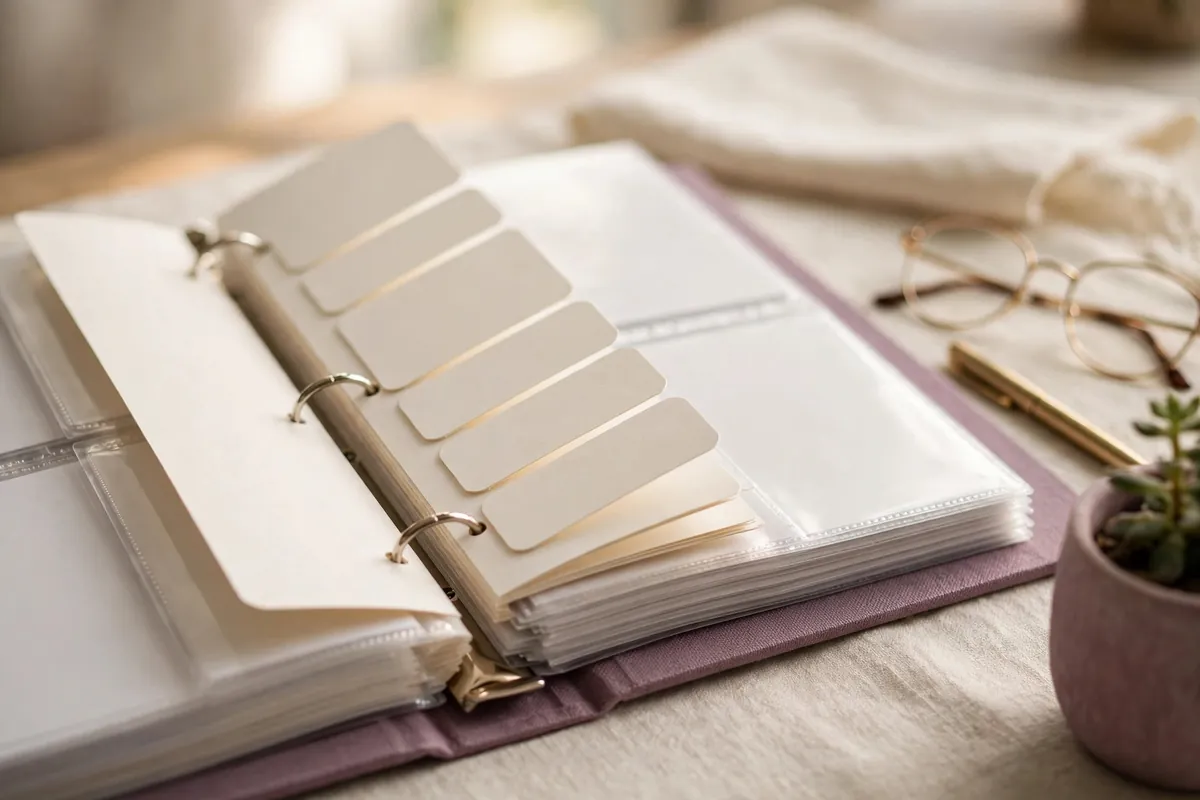
Choose a binder or a set of printable pages you can add to over time, because the collection will grow. Sections with clear labels matter more than the binder itself. If you use a fillable PDF version alongside the printed one, keep the same section order in both, so a page can be found in either copy.
The seven sections every caregiving binder needs
- Contact sheet. Doctors, pharmacy, hospital, insurance, home-care agency, and the family members who help — with phone numbers, all on one page.
- Medication list. Every current medication, its dose, when it is taken, and who prescribed it. One current list, updated whenever anything changes, replaces a drawer of pharmacy printouts.
- Appointment log. Upcoming appointments with dates and addresses, plus a short line on what each one is for.
- Visit notes and questions. A page for each appointment: questions you want to ask written down beforehand, and the answers and instructions written down before you leave the room.
- Insurance and ID copies. Copies of insurance cards and identification, so the originals can stay in a wallet where they belong.
- Daily care notes. Sleep, meals, mood, and anything unusual, noted briefly. These notes are how a pattern gets spotted and how one caregiver hands over to the next without a long phone call.
- Emergency page. The one-page summary a paramedic, a neighbor, or a new aide needs first: conditions, medications, allergies, emergency contacts. A copy on the refrigerator is the classic spot.
Paper, digital, or both
Paper works in the room where care happens and needs no battery or password. Digital files are easier to share with a sibling in another city and easier to back up. Many families keep both: a printed binder at home and a fillable PDF copy that gets updated on a computer and reprinted when a section changes. Whichever you choose, print in a size your household printer handles — US Letter in the US, A4 in the UK — and keep spare blank pages in the back for quick notes.
Keeping it current in ten minutes a week
A binder fails when it goes stale, so build in a small routine. After every appointment, file the paperwork the same day and update the medication list if anything changed. Once a week, spend ten minutes moving loose notes into their sections and checking that the next two weeks of appointments are written down. When the medication list changes, reprint that one page rather than the whole binder. Small, regular tidying is what keeps the system trustworthy.

If you would rather start from a ready-made system
Some people enjoy building their own sections page by page. Others want the structure done for them so they can start filing tonight. Our Caregiver Command Binder is a 32-page fillable and printable binder in US Letter and UK A4, with a companion spreadsheet for tracking appointments, medications, and expenses. For memory care specifically, the Dementia Care Binder uses the same one-binder structure with sections shaped around dementia care routines. And if you only do one thing today, start with the emergency page: our Dementia Fridge Emergency Card is free — just ask for it through our Contact page and we will send it over.
Prefer it ready-made? The Caregiver Command Binder has every section in this guide already built — printable and fillable, in US Letter & UK A4. Get the Caregiver Command Binder →